
Once you start to recognize dyscalculia, the next worry is usually about school. A child can feel safe and supported at home, yet still face a full class, a fast pace, and a board full of numbers every morning. The good news is that school does not have to be the place where things go wrong. With the right supports, a classroom can become one of the steadiest parts of a child’s week. This article looks at what genuinely helps, how to ask for it, and the rights that stand behind your request.
We have already covered what dyscalculia is and the early signs in counting, time, and money. Here we turn to the place where math becomes a daily, public event: the classroom.
How Dyscalculia Shows Up in Class
A teacher rarely sees a label. They see a child who takes much longer than others on the same worksheet, who still counts on fingers when peers have memorized their tables, or who freezes when called to the board. Without the right lens, this can be misread as not trying, not listening, or not caring.
The truth underneath is different. The child is working harder than anyone around them, just to keep quantity steady in their mind. Word problems pile a reading load on top of a number load. Timed tests turn ordinary difficulty into panic. Copying a long sum from the board, then losing the place halfway through, has nothing to do with effort. When the classroom understands this, the question shifts from “why won’t this child try” to “what would make this reachable.”
Accommodations That Genuinely Help
An accommodation does not change what a child learns. It changes the road they take to get there, so that the difficulty with number sense does not block everything else. Most are small, cost nothing, and help the whole class. These are the ones worth discussing with a teacher:
- Extra time on tests and longer tasks, so that slow, careful processing is not punished as failure.
- A calculator or a times-table chart for work where the goal is reasoning, not recall. A child can show they understand a method even if the raw facts will not stick.
- Fewer questions that test the same skill. Ten problems prove a point as well as forty, and forty can break a child who needs longer on each one.
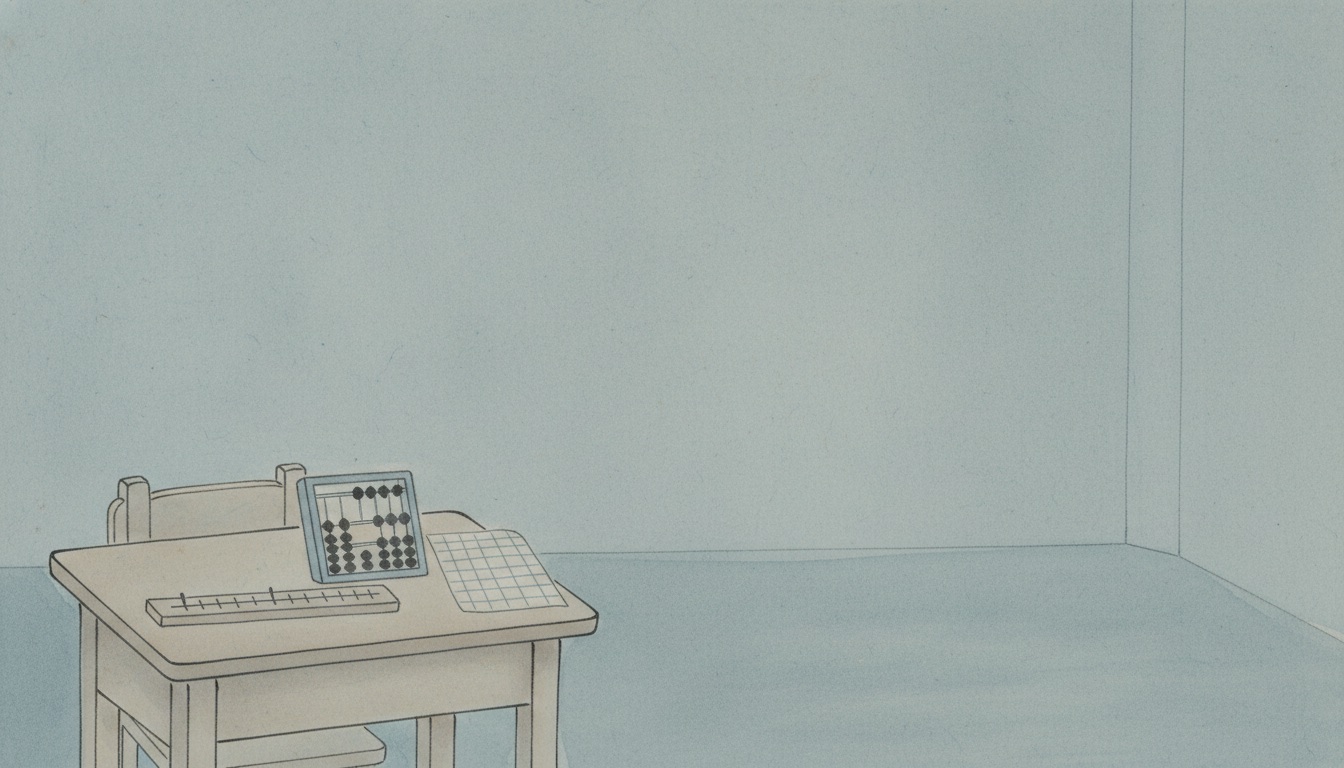
- Concrete and visual tools, like a number line on the desk, counters, or base-ten blocks, kept available without the child having to ask.
- Squared paper for lining up columns, so that a right method is not lost to a misplaced digit.
- A reference sheet with key steps or formulas, which removes the memory load and leaves room for the actual thinking.
- Calmer test conditions, such as a quieter space or reading the questions aloud, so anxiety does not hide what the child knows.
None of these give an unfair advantage. They remove a barrier that has nothing to do with the skill being measured, the same way reading a question aloud helps a strong thinker who struggles to decode the words.
Rights and Formal Support
Behind these accommodations there is usually a right, not just a favor. The exact name and process differ from country to country, and even from school to school, so the local detail is worth checking. In some places a formal plan follows an assessment, with names like an individual education plan or a learning support plan. In others, a recognized diagnosis opens the door to adjustments in lessons and exams.
What stays the same almost everywhere is the underlying logic. Once a learning difference is identified, a child has a reasonable claim to support that lets them show what they actually know, and a parent has standing to ask for it. You do not need to win an argument or prove your child is trying hard enough. You are asking the school to meet a recognized need, and a written plan helps everyone, including next year’s teacher, start from the same page. If you are unsure what your country or school offers, the school counselor or special educational needs coordinator is the right first person to ask.
Working With the Teacher
Most support lives or dies on the relationship with the classroom teacher, far more than on any document. A teacher who understands the child will quietly adjust a hundred small things a plan could never list. That partnership is worth building with care.
Come with concrete examples rather than worry. “He understands the method but loses the steps under time pressure” tells a teacher far more than “he is bad at math.” Share the small notes you have kept at home. Ask what the teacher is seeing in class, because the picture is often different there, and agree on a simple way to stay in touch. The goal is a shared, calm view of one child, not a list of complaints. If you would like help getting ready for that conversation, our free parent tools are built to make exactly this kind of preparation easier.
Protecting Confidence
Accommodations are not only academic. A child who is always last to finish, always corrected, always the one who “still can’t,” slowly learns a quieter and more damaging lesson: that they are not clever. By the time that belief sets in, it does more harm than any single missed sum.
This is why the right support matters so early. When a child is given the tools to show what they know, math stops being the subject that proves they are less than their friends. Praise the thinking, not just the answer. Let them use a calculator without shame. Make it ordinary, not a special arrangement whispered about. A child who keeps believing “I can learn this my way” will go far further than one who has quietly decided math is simply not for them.
Remember, recognizing dyscalculia and asking for support is not labeling your child; it is making sure school sees the learner, not the gap. Dyscalculia, like dyslexia, does not define your child; it only describes how they learn. You can revisit what dyscalculia is and its early signs any time, and because it so often travels with dyslexia, the same calm, evidence-based approach helps with both. For more parent guidance and free tools, kindlexy.com is always here.