
Free · Private · No signup

Emotion Chart

Some children, especially those with autism or hyperlexia, find their own feelings hard to read or describe. This tool turns emotions into a simple chart of clear faces, so a child can point to how they feel and print it for the wall or the fridge.
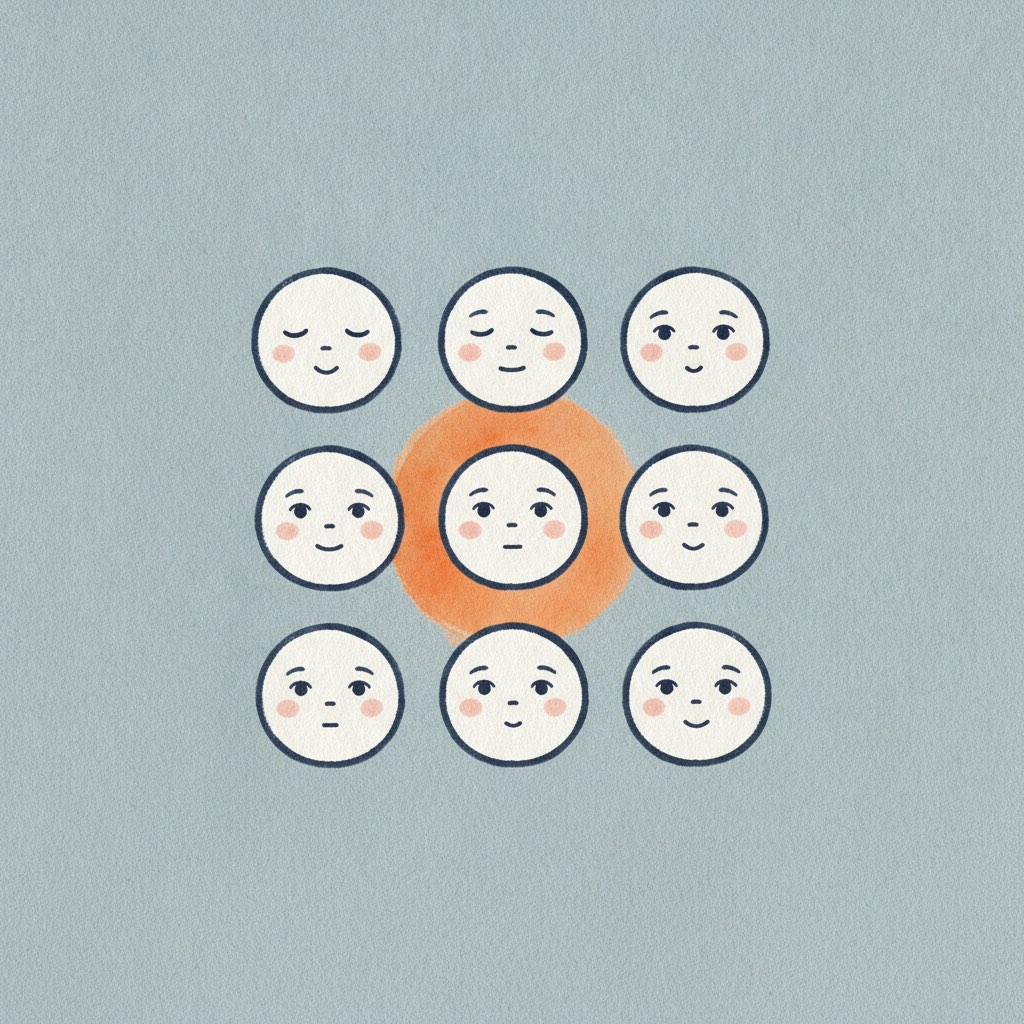
Emotion Chart illustration: a grid of simple faces showing happy, sad, angry, and calm
Emotion Chart

Build a chart of feelings your child can point to. Naming a feeling is the first step to handling it.

How are you feeling?

😀
happy
😢
sad
😠
angry
😨
scared
😌
calm
😴
tired
🤩
excited
😟
worried
On your chart:8

Tap to add or remove feelings from your chart.

Keep at least two feelings on the chart.

What the Emotion Chart does

For a child who finds feelings hard to read or put into words, the most helpful thing is often simply being able to point. An emotion chart turns an invisible feeling into a row of clear faces: happy, sad, angry, scared, tired, calm. The child can show you how they feel before they ever have the words for it.

The Emotion Chart lets you pick the feelings that matter, arrange them, and print a clean chart for the wall or the fridge. It is a gentle way to take the pressure off naming emotions, something many autistic and hyperlexic children find hard. From kindlexy.com.

How it works

  1. 1

    Pick the feelings

    Choose simple face cards for the emotions that come up most in your child's day.

  2. 2

    Arrange the chart

    Lay the faces out into a clear chart, so every feeling has its own place to point to.

  3. 3

    Print it

    A clean chart for the wall or the fridge, ready in seconds. Nothing leaves your device.

  4. 4

    Use it together

    Let your child point to a face when words are hard, so naming a feeling becomes a calm habit.

Frequently asked questions

+

What does the Emotion Chart do?

It lets you build a simple visual chart of feelings and print it, so a child can point to how they feel instead of having to find the words. Seeing emotions laid out as clear faces is a calm, common support for children with autism or hyperlexia.
+

Is it free?

Yes. Free, no signup, no account, and no usage limits. It runs right in your browser.
+

How does an emotion chart help?

Some children find their own emotions hard to read or describe, something often called alexithymia and common alongside autism. A chart of clear faces turns an invisible feeling into something a child can point to, which is a gentle first step toward naming it and feeling calmer.
+

What age is it for?

It works for a wide range, roughly three to twelve, and for nonreaders too, since it is picture-based. You can keep it to a few core feelings or build a fuller set.
+

Is this a diagnosis tool?

No. It is a support aid for home use. It does not diagnose or treat autism, hyperlexia, or alexithymia. If you have concerns, speak with a qualified specialist.
+

Can I print the chart?

Yes. Choose the feelings on screen, then print a clean chart for the wall or a calm corner. Nothing leaves your device.

Available now